Rocklin, CA · Garage Door Service
Antelope homes cluster around a 1993 build year. See where repair stops making sense and a new door starts paying for itself, with install work run out of Rocklin.
Antelope's median household income sits at $95,102, a notch below the wider service area's $98,158. That number matters more than it looks like it should, because it decides where the repair-or-replace line falls. At this income level, a homeowner staring down a third spring or opener repair on a 30-year-old door usually comes out ahead putting that money toward a new door instead of another patch job. We run installs out of Rocklin, nine miles up the road, so a visit here isn't a special trip, it's a normal one. We look at the door in person before we quote anything, because a torsion spring swap and a full tear-out are not the same call, and we're not going to tell you it's the second one if it's the first. Full coverage details for the area are on the Antelope coverage page, and the general rundown of what installation work looks like across our territory is on the Rocklin installation page.
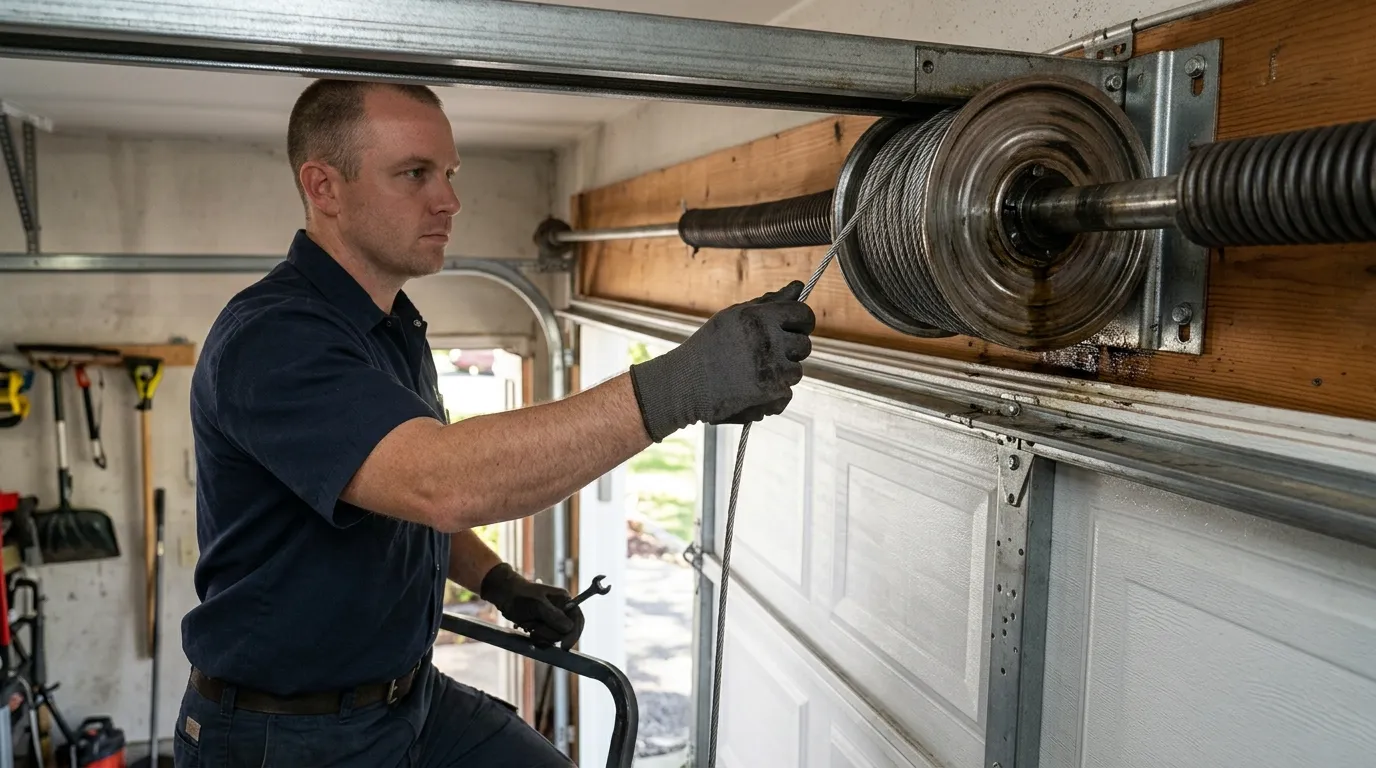
Most Antelope garage doors going in today are replacing originals from a house built around 1993, plus or minus a few years either side. That means steel doors on torsion hardware that's been cycling for three decades, openers that are either the original chain-drive unit or a first-generation replacement from the early 2000s. Neither is dangerous to work around, but parts for the oldest of these openers are getting hard to source new, and a repair can turn into a wait on a part nobody stocks anymore. A full swap sidesteps that. We pull the old door, track, and drum, check the header for rot or shift (rare on houses this age, but we check), and set new hardware sized to the opening rather than jury-rigged to fit what was there. Where the opener is original, we replace it in the same visit rather than leaving a new door hanging on a thirty-year-old motor. That's not upselling, it's avoiding a callback in eight months.
The complaint we hear most from this part of town isn't a door that won't open, it's a door that's gotten loud, or one that's started sagging on one side when it's been sitting closed through a hot stretch. Houses from the early-to-mid 1990s often have steel doors with thin original insulation, and under the severe summer heat this region sees, that thin foam does a poor job keeping the garage from turning into an oven, which then pushes heat into an attached laundry room or the wall behind it. A new door with real foam-core insulation doesn't fix the whole house, but it stops the garage from being the hottest room attached to it. If the sag is isolated to hinges and rollers, that's a repair, not a replacement, and we'll say so.
The thing that turns a straightforward swap into a longer job is the opening itself, not the door. On houses built in this era, we occasionally find the framing was never squared to the size on the original permit, which nobody would have noticed until a new door needs to sit flush against it. When that happens, we shim and trim on site rather than order a custom door, which would add weeks. The other snag is track clearance on garages with lower headroom than modern code assumes, common enough in the 1993-era stock that we check it before quoting, not after we've shown up with the wrong door. What we don't do is push a smart opener or a high-end insulated door onto a homeowner who just wants a working door that closes. If a basic steel door meets the job, we sell the basic steel door.
We don't have a fixed price to publish here, because the number depends on door size, insulation level, and whether the opener needs replacing alongside it, and Antelope's mix of house sizes means that answer varies more than a flat rate would suggest. What we can say is that at the area's median income, the math tends to favor a new door once a homeowner has paid for two separate repair calls on the same aging opener or spring assembly within a year or two. Below that point, repair is still the better bet. We quote after we've seen the door, not before, and the quote covers the whole job, not a base price with hardware added on afterward.
A standard single-door swap, door and track only, runs a few hours on site once the crew arrives. Add an opener replacement and you're adding time for wiring and safety-sensor alignment, more if the existing opener is wired in a way that's changed since the 1990s code it was installed under. We don't stage overnight jobs here, everything gets scheduled as a single visit from Rocklin, and we tell you up front if a part on your specific door, usually an older opener model, means a short wait before we can get on the calendar. That's the one real limitation worth saying out loud: if your opener is old enough that the replacement part isn't a same-week item, we'll tell you the wait instead of guessing.
If your house dates to around 1993, which is typical for this part of Antelope, a door and opener that age has usually had one or two prior repairs already. One more repair on top of two others often costs close to what a new door runs. We'll tell you which side of that line you're on after we look at it, not before.
No. We run installation crews out of Rocklin, about nine miles away, and Antelope is part of our regular coverage area. There's no separate depot here, just a scheduled visit like any other job on the route.
A door with a real foam core insulates better than the thin original insulation common on doors from the early 1990s. It won't cool the garage, but it will cut down how much heat pushes through into an attached room during the hottest part of the season.
It happens on original units from this era. If a part isn't a same-week item, we say so at quote time rather than after we've started, and in most of those cases replacing the opener alongside the door is the more sensible fix anyway.
Call now or request a free quote - same-day service on most repairs, upfront written pricing.