Rocklin, CA · Garage Door Service
Cable repair for Loomis homes built mostly in the 1980s, priced against a median income near $103,000. Traveling 3 miles from our Rocklin shop.
Loomis sits at a median household income around $103,435, which changes the math on a cable job before we even get out of the truck. At that income level, a snapped cable on a door under ten years old is almost always a repair, not a replacement - the door, opener, and track are worth saving, and a cable-and-drum job runs a fraction of a new door. The calculation shifts on the older end of the local stock. Houses here mostly went up between 1963 and 2004 with the local median landing around 1981, so a fair number of Loomis garages still carry the original door and the original drums. When a cable goes on one of those, we're also looking at pitted drums, a worn bottom bracket, and sometimes a track that's been reshaped by years of an unbalanced door dragging on one side. That's the point where we tell you honestly whether the cable is the job or just the symptom.
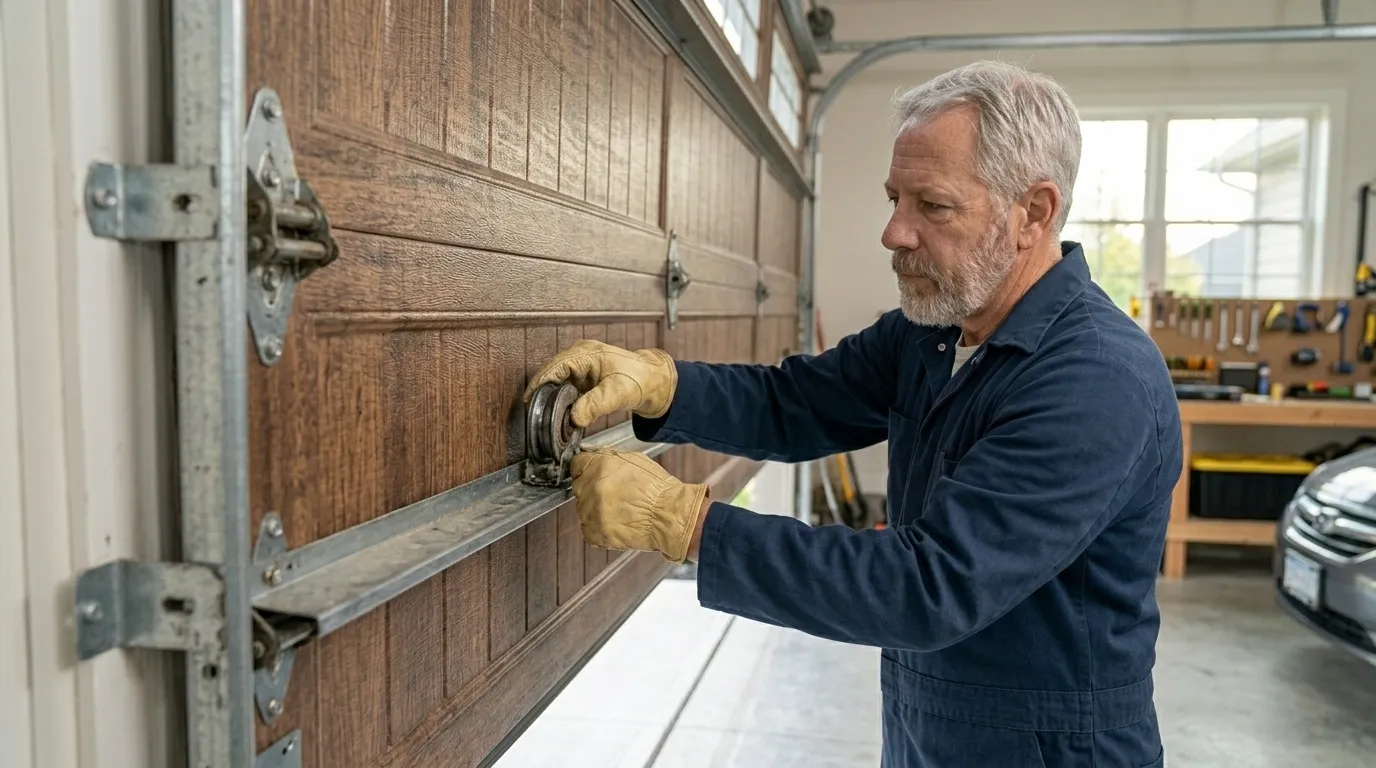
The repair itself is mechanical, not electrical: two cables run from the bottom brackets up over the drums to the torsion spring. One frays or snaps, the door drops crooked or won't move at all, and the fix is a matched pair of cables sized to your drum diameter and door weight - never just the broken one.
A broken cable puts a door under spring tension with nothing holding the other side level. That's not a project for a Saturday with a socket set. The torsion spring stays wound whether the cable is intact or not, and cutting corners here is how people end up in the ER with a crushed hand or a door that comes down on a car.
What you can safely do yourself: leave the door where it is, don't force the opener to cycle it, and if a cable snapped while the door was open, block it from dropping with a clamp on the track rather than trusting the opener's arm to hold it. Beyond that, this is a call-a-pro job, not a YouTube-and-a-ladder one.
A straight cable-and-drum swap on a standard double door, done once we're on site, is usually a same-visit fix - most of the time on any Loomis call is diagnosing what the cable took down with it, not the cable itself. Houses from the early-1980s wave often have the original torsion hardware, and if the drums are grooved or the shaft is bent, that adds parts and adds time. We'd rather find that before we start than mid-job.
We run this job out of Rocklin, and Loomis is close - about 3 miles out, so getting a truck to you isn't the bottleneck. What matters more is telling us upfront what the door is doing: dropped on one side, won't open at all, or opener straining and reversing. That tells us which cables, drums, and brackets to load before we leave the shop rather than guessing on site.
Two things turn a simple cable job into a bigger one in this area. First, the heat. This region sits in a severe heat climate band, and repeated summer heat cycling dries out cable lubrication and stresses the spring that the cable rides on - a cable failure here is often the spring's fault, not the cable's. Second, the age split in the local housing stock. A 1981-built house with its original hardware can have a torsion shaft that's rusted or bent where a newer door wouldn't. If we get the door open and find the shaft itself is compromised, a cable swap alone won't hold - we'll tell you that before we bolt anything back together, not after.
We carry cable in the common gauges and lengths for residential torsion setups, along with matched drums, bottom brackets, and the clamps and winding bars the job needs. What we don't carry is a guess: if a door needs a cable length or drum size we don't have loaded, we'll say so on site rather than force a mismatch that fails again in a year. That's the one limitation worth knowing going in - most calls close in one visit, but not every one does.
No, and mixing them up is common. The spring stores the lifting force; the cable transfers that force to the door. A snapped cable usually means the door drops crooked and stops. A snapped spring means the door feels dead heavy or won't budge. Both can fail together, especially on older torsion hardware, which is why we check the spring on every cable call.
We don't price by income, but we do factor in what a fair repair-versus-replace line looks like for the area. At Loomis's median household income near $103,435, most cable failures on doors under 10-15 years old are straightforward repairs - replacement only makes sense when the door itself, not just the cable, has failed.
About 3 miles. We run this and other repair calls out of our Rocklin shop rather than keeping a separate branch in Loomis, so travel time is short but not instant - worth mentioning when you're deciding how urgent to make the call.
Call now or request a free quote - same-day service on most repairs, upfront written pricing.