Rocklin, CA · Garage Door Service
New garage door installation for Orangevale's 1976-era homes, handled by a crew that drives the eight miles from Rocklin and knows what that housing stock needs.
Orangevale sits eight miles from Rocklin, and that drive shapes how a new-door job here actually runs. It's a scheduled trip, not a walk-in visit, which means the crew shows up with the door, the track hardware, and the opener already picked for the job rather than working it out on-site. What we're usually replacing in Orangevale isn't a door that just quit - it's a door that was never built for what the house needs now. Most homes in this part of the service area went up around 1976, which puts them in an era of steel doors on light-gauge tracks, single torsion springs sized for a lighter panel, and openers that predate any kind of rolling-code security or battery backup. None of that is broken exactly. It's just old enough that when a homeowner calls about a new install, the real driver is usually a warped panel, a dead opener that nothing plugs into anymore, or a spring that's been replaced twice already on hardware that was never rated for a heavier insulated door. Swapping in a new door on old track and jamb hardware is how you end up calling again in a year.
A single panel or a garage door opener, sure, plenty of homeowners handle that on a weekend. A full new-door installation is a different animal, and in Orangevale's 1976-built houses it's a worse candidate for DIY than in newer construction. The jamb framing and header on houses this age were built to the door that was there originally, not to whatever's sold at a box store now. Get the spring tension wrong on an unfamiliar torsion setup and you're not looking at a bent panel - you're looking at an emergency room visit. There's also the heat to think about: this area sits in a severe-heat climate band, and a door that's not squared and sealed right will let that heat straight into the garage and whatever's stored or parked in it. We're not going to tell you it can't be done. We're telling you the margin for error on a full install, on hardware this old, is thin, and the tools to do it safely aren't things most garages have lying around.
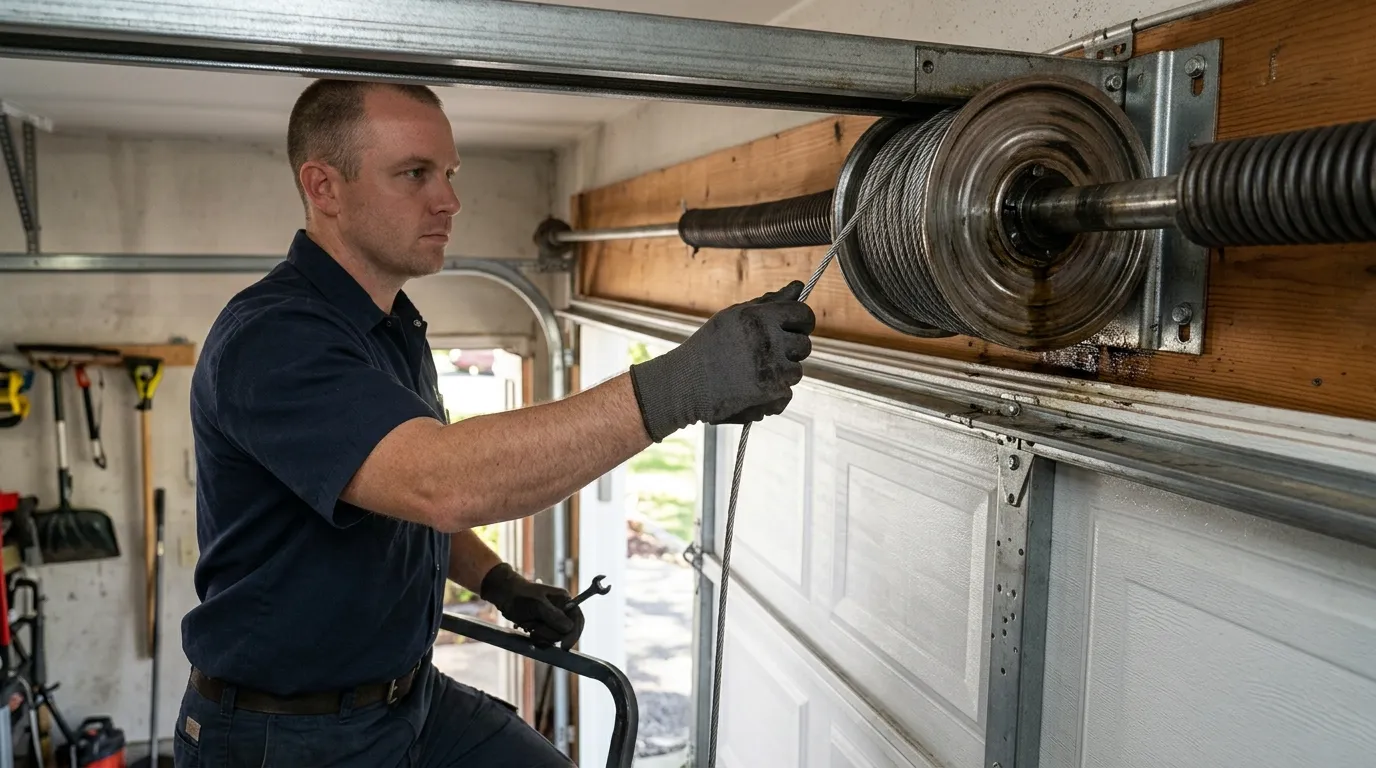
A new install starts with pulling the old door and, just as often, the track and springs that came with it - on a 1976 house those three usually need to go together, since the new door's weight and R-value don't match what that old torsion spring was wound for. We set new jamb brackets where the framing allows, run new track plumb to the actual opening (which on a house this age is rarely perfectly square anymore), and size the spring to the door going in, not the one coming out. Insulated doors matter more here than they would in a milder climate - with summer heat as severe as this region sees, an uninsulated steel panel turns a garage into an oven, and that heat migrates into the house through a shared wall. One honest limit: if the opening itself is out of square by more than a small amount, or the header's not sound, that's carpentry work we flag rather than paper over with shims. A door hung on bad framing will bind no matter how good the door is.
With roughly 13,392 households in Orangevale, most on similar-era lots, a straightforward new single-door install with standard track runs a normal working morning once the crew's on-site - the drive out from Rocklin is built into the schedule, not tacked onto the job time. Add a second opener, a custom-width opening, or framing repair on an out-of-square jamb, and the day runs longer. We don't quote exact hours here because every one of those 1976-era garages has its own quirks - some were framed a hair different from the next house on the block, and we won't know which until the old door's off the hardware. What we can tell you is that this isn't a same-day drop-in where you call in the morning and park in the garage by lunch; it's a scheduled visit, and scheduling it around the trip out is part of doing it right instead of rushing a heavy door into an opening that wasn't checked first.
No. We work out of Rocklin and drive the eight miles out for every Orangevale job. That means installs here are scheduled visits rather than walk-in service, so we bring the door, track, and opener already matched to your opening instead of figuring it out once we arrive.
Often yes, but not always. Framing on houses from that era wasn't standardized the way newer construction is, so we check the jamb and header for square before ordering anything. If the opening's out of true, that's a separate carpentry step we'll flag rather than force a door into.
Given the severe heat this area sees in summer, an insulated door is worth the extra cost if your garage shares a wall with living space or you park anything heat-sensitive in it. An uninsulated steel panel, common on 1976-era installs, does very little to block that heat.
Call now or request a free quote - same-day service on most repairs, upfront written pricing.