Rocklin, CA · Garage Door Service
Garage door repair and spring service for North Highlands, built out mostly around 1970 - older hardware than the newer subdivisions closer to Rocklin. We travel out from Rocklin for the job.
North Highlands sits about 12 miles from our Rocklin shop, and the housing stock here runs older than a lot of what we see closer to home. The typical house in this part of the service area was built around 1970, well ahead of the 1981 median across the wider region we cover. That matters because a door and opener installed in a 1970 build has usually been replaced or patched at least once by now, sometimes with parts that don't match what came stock. When we get a call from this area, we expect worn original hardware or a mismatched retrofit before we even see the door. Median household income here runs around $65,090, noticeably below the $98,158 median across the full service area, which is part of why we try to be straight about what actually needs replacing versus what can be adjusted or repaired for less.
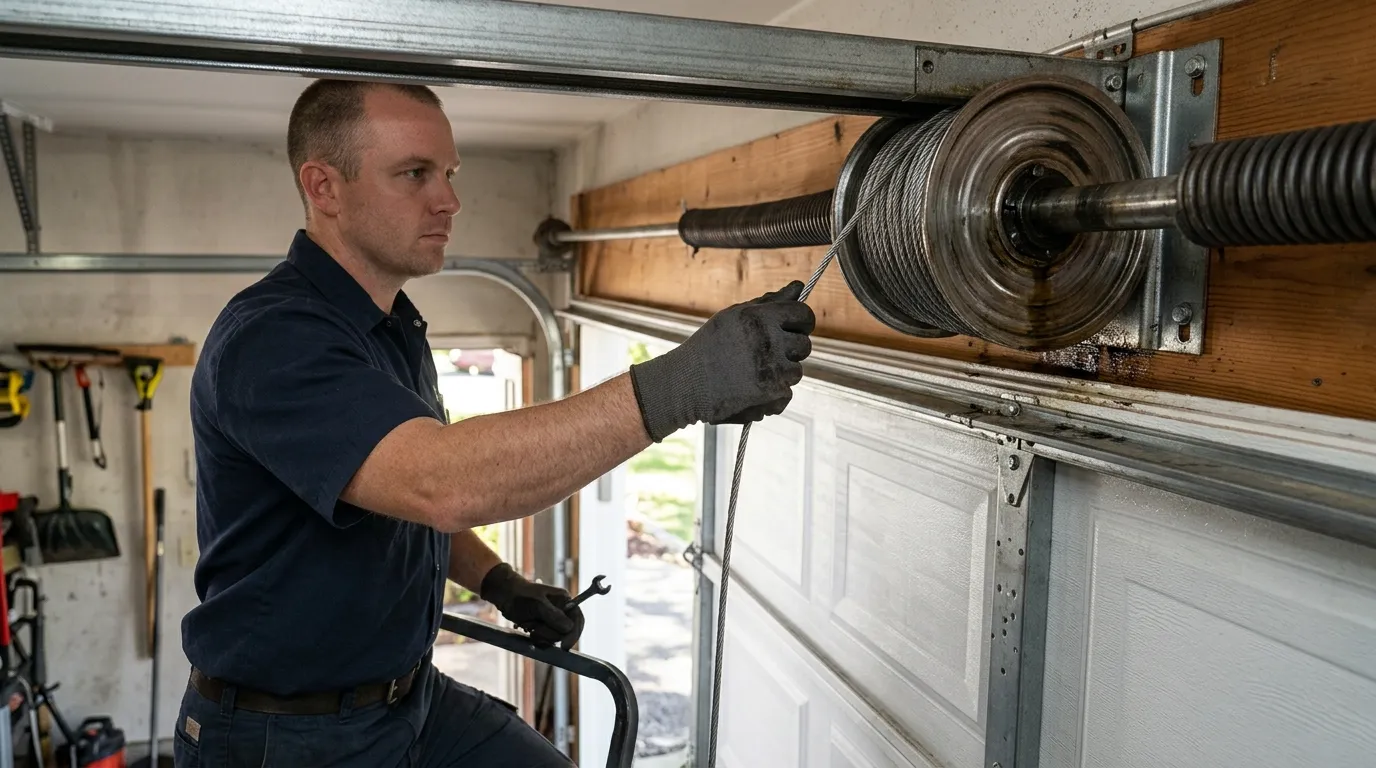
A door installed around 1970 has had five decades to work through openers, springs, and at least one re-track if the house has had any settling. Torsion springs from that era, if original, are long past their rated cycle count - most are only rated for a set number of open-close cycles, and a spring installed in 1970 has seen far more than that. Openers are usually not original; chain-drive units from the 80s and 90s are the most common replacement we find layered on top of 1970s track systems. That mismatch between an old track and a newer motor is a recurring issue, not a rare one, in a neighborhood built out this early.
Houses from 1970 tend to have narrower door openings and lighter original panels than what gets built today, which means a straight swap to a modern insulated door sometimes needs bracket or header adjustments rather than a plug-and-play install. We also see steel doors from that era with surface rust at the bottom panel, especially with our heat band being classified severe - metal doors here take real thermal cycling, expanding and contracting daily through the hot months, which loosens hinges and warps thin panel steel faster than it would in a milder climate. If your door is original to a 1970 build, we're usually looking at hardware fatigue first, not a fresh electrical fault.
The calls we get from this area cluster around a few things: a spring that finally lets go on an original torsion setup, an opener from the 80s or 90s grinding instead of lifting, and rollers that have worn oval instead of round after years of heat exposure. We also see a fair number of track alignment calls, where an older track was never upgraded when the opener was swapped and the two systems are working against each other. One honest note: if your door is original steel from 1970 with significant bottom-panel rust, we'll usually tell you replacement is the better use of your money over another repair - patching rusted steel at that age tends to be a short-term fix.
No, we run out of Rocklin, about 12 miles away, and travel out for jobs in North Highlands. We don't keep a local depot here, so we're straightforward about that when you call.
Depends on the part. A worn spring or opener can usually be replaced on an old track. But original steel panels from around 1970 with heavy bottom-rail rust are often better replaced than patched again - we'll tell you which situation you're in before we quote anything.
In houses built around 1970, it's common for the opener to have been replaced once or twice since the original install, often without updating the track or springs to match. That mismatch is one of the more common issues we run into in this area.
Call now or request a free quote - same-day service on most repairs, upfront written pricing.